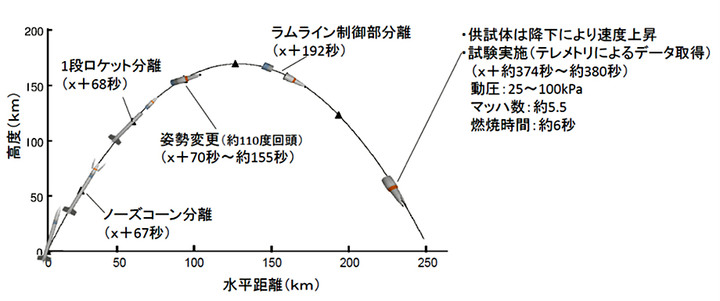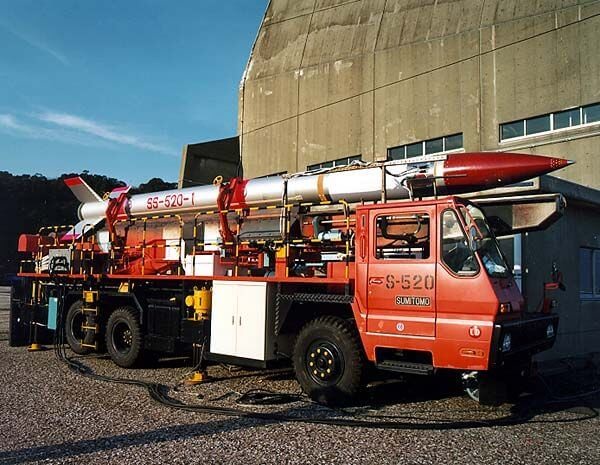
日本這個就是為了開發極音速飛彈 整個發射裝置就是一個彈道飛彈發射車


日本成功測試超燃沖壓發動機


=============================
https://www.jaxa.jp/press/2022/07/20220724-1_j.html

観測ロケットS-520-RD1打上げ結果について
2022年(令和4年)7月24日

国立研究開発法人宇宙航空研究開発機構

国立研究開発法人宇宙航空研究開発機構(JAXA)は、2022年7月24日(日)に、「極超音速飛行に向けた、流体・燃焼の基盤的研究」の一環として、観測ロケットS-520-RD1を内之浦宇宙空間観測所から打ち上げました。

ロケットは正常に飛翔し、内之浦南東海上に落下しました。

ロケット飛翔結果
ロケット機種・号機 打上げ時刻
(日本標準時) 発射上下角 最高到達高度 着水時刻
S-520-RD1 5時00分00秒 78.0度 168km(打上げ206秒後) 打上げ412秒後
なお、打上げ時の天候は晴れ、西南西の風0.7m/秒、気温23.5℃でした。

これをもちまして、観測ロケットS-520-RD1実験は終了となります。

今回の観測ロケットS-520-RD1打上げ実施にご協力頂きました関係各方面に、深甚の謝意を表します。

============
文章關鍵字


https://www.kenkai.jaxa.jp/research/supersonic/supersonic.html

極超音速機の研究
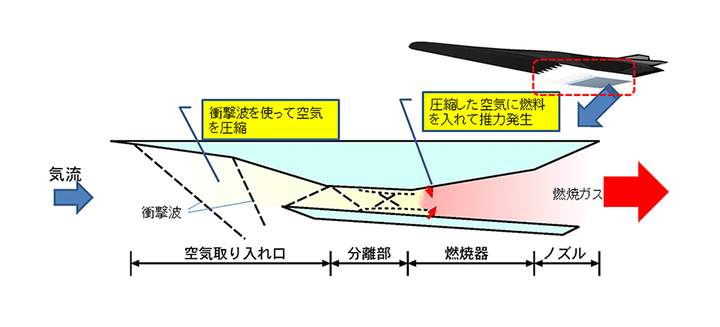
JAXAでは、極超音速(音速の5~6倍以上の速度)でも使用可能な空気吸い込みエンジン(スクラムジェットエンジン:ロケットエンジンが搭載した酸素と燃料を燃焼させるのに対し、大気中の酸素と搭載した燃料を燃焼させるもの)の研究を実施しています。

空気吸い込みエンジンは、搭載不要となった酸素の代わりにより多くの貨物を搭載できることから、将来の宇宙往還機や大陸間高速輸送機への適用が期待されています。

飛行試験の目的
空気吸い込みエンジンの地上の風洞試験では、①複雑な流路により生じる気流の乱れ強さの違いと②気流加温に伴う異ガスの混入、により実飛行との間で空力加熱やエンジンの特性に差異が生じます(図1)。このため、JAXAは空気吸い込みエンジンについて、地上での風洞試験結果を補正して実飛行状態における特性を予測する解析ツールを構築することを目標とする研究を実施しています。

本飛行試験は、実飛行で燃焼データ等を取得し解析ツールの評価を行うために実施します。

解析ツールを構築できると、空気吸い込みエンジンを搭載する将来の飛翔体実現に必要となる飛行試験回数を減らすことができ、開発コストを低減できます。本飛行試験によって、風洞試験結果に加えて実飛行中のデータを取得し、解析ツールの検証を行うことが目的です。
日本的極音速風洞很強悍 連美國的X-59都要送去日本jaxa測試

==================================================
https://www.nasa.gov/image-feature/x-59-model-tested-in-wind-tunnel-in-japan
A model of the X-59 aircraft, the centerpiece of NASA’s mission to gather information intended to help enable a new era of commercial faster-than-sound air travel over land, recently completed a round of testing in a wind tunnel in Japan.

NASA and the Japan Aerospace Exploration Agency (JAXA), under an agreement signed in December 2020, conducted independent wind tunnel studies of the 1.62 percent scale model of the X-59. Under a separate agreement, The Boeing Company also participated in both of these tests. The test at JAXA was an opportunity to collaborate with international and industry partners and allowed the NASA research team to acquire tunnel-to-tunnel comparisons prior to the first flight of the X-59 aircraft.

When an airplane travels at supersonic speeds, waves of changing air pressure are created that we perceive as sounds called sonic booms. The shape of the X-59 is designed to reduce these shock waves, so the perceived sound is little more than a thump – if you hear anything at all.

To test the X-59’s design, researchers placed a scale model in a JAXA wind tunnel and took measurements of the pressure waves as the supersonic airflow passed over the model to see if they behave as predicted. This test data can sometimes vary, even when running the same test with the same model. Likewise, putting the model in a different wind tunnel could result in a different version of the data.

NASA JAXA Boeing Boom test Japan X-59 Quesst
The scale model of the X-59 is suspended in the test area of JAXA's wind tunnel as a researcher prepares for a test. Researchers use scale models in wind tunnels to measure the air flow and pressure waves to compare with predictions.
Credits: JAXA
“But that’s a good thing. By using the same model in both wind tunnels, we can improve our certainty in the data obtained and increase our understanding of the X-59’s design,” said Melissa Carter, a senior researcher with NASA’s Commercial Supersonic Technology project.

By comparing the data previously gathered from wind tunnel tests at NASA facilities with the data now gathered from the JAXA test, researchers are able to better understand and predict how the air will react when the X-59 takes flight.

Due to COVID-19 travel restrictions, NASA researchers were unable to participate in person for the test at JAXA. Members of NASA’s test team instead traveled to Boeing in Seattle where a “virtual control room” was setup for the test. This setup allowed the NASA team to participate in the testing alongside the Boeing test team and better leverage Boeing's prior knowledge and experience testing in the JAXA facility.

Preliminary data analysis indicates the pressure signatures are of good quality with well-defined and repeatable features. NASA plans to participate in a follow-on computational prediction workshop with both Boeing and JAXA later this year.

David Meade
NASA Langley Research Center
JAXA:旋转爆震发动机:使用冲击波作为推力

-新引擎技术世界首次太空演示-

日本宇宙航空研究开发机构:

7月27日凌晨5时30分,“S520-31”从内浦航天中心发射升空。

配备“引爆发动机”:

将甲烷和氧气反应产生的冲击波转化为推力的最新技术。

外太空演示:

被称为“爆震发动机”的技术在世界上首次在外层空间进行了展示。

燃烧甲烷和氧气的混合气体,
以2公里/秒的速度扩展的冲击波,
转化为推力的发动机技术,
世界上首次在外太空进行测试。

包含实验数据记忆的胶囊被扔到海里并被直升机回收。


這是網路上查到的!!
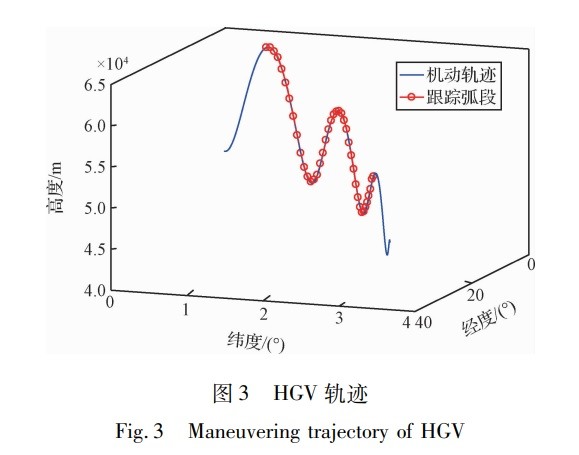
這是共產黨的武漢 中國人民解放軍空軍預警學院 幾位學生所發表的 "An Intelligent Prediction Method of Hypersonic Glide Vehicle Trajectory" 論文裡所記載的"超高速滑翔器軌跡模擬" 圖!!

圖裡的高超音速滑翔器的飛行軌跡是高度會高低變化, 可能是要低速時進行軌跡變換!!
這跟日本的沖壓或超燃引擎所形成的飛行軌跡大不相同!!
Mk2k wrote:
這是網路上查到的!!(恕刪)


這是模擬的 所以軌跡很奇怪
Mk2k
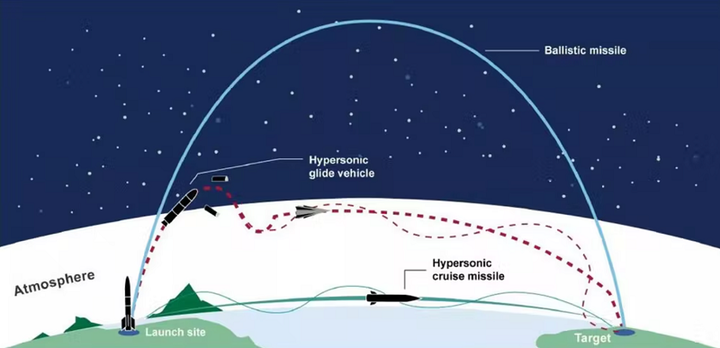
滑翔器本身不帶動力引擎, 所以可以很輕, 可以做到彈道飛彈所做不到的軌跡變換!! 若能同時達到高超音速與靈活變換軌跡, 對守方是比較具威脅性的!! 但理想與現實有多大的差距, 可能一般人無法得知
Mk2k
凡是有利有弊; 高超音速就必須伴隨高熱與通訊中斷!! 滑翔器可以在低速時進行通訊與變換軌跡, 修正目標軌跡; 而這種特殊軌跡特徵, 就成了金字招牌, 辨識度很高!!
ZAMBOTKIKIKI wrote:
這是模擬的 所以軌跡很奇怪


拉開來看就不會覺得奇怪了。

悼念一下教主前前前世。

四年过去,老共的超燃冲压导弹都服役不止一款。

日本的超燃冲压发动机什么时候装到导弹上
shuling0909
原來是挖墳、我還以為日本已知用火。[笑到噴淚]
文章分享
評分
評分
複製連結

今日熱門文章 網友點擊推薦!