有很壯跑全馬成績也不差的人嗎?


【麵包超人】 wrote:
補充
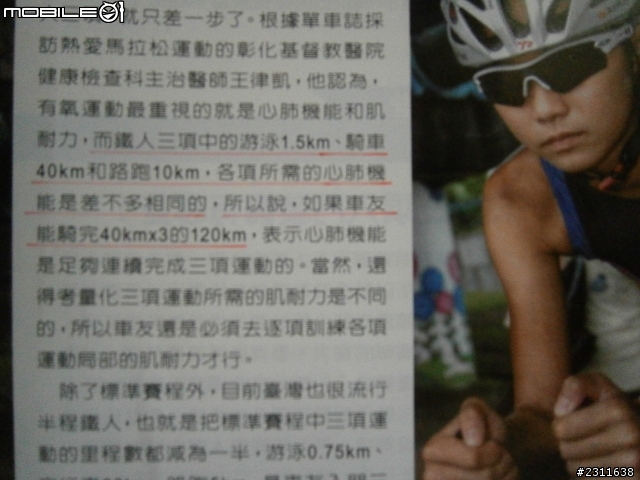
【單車誌】第68期,有引用醫學單位的研究,
1.5的游泳= 10公里慢跑 = 40公里單車。

類推, 42公里的全馬 = 164公里的單車。(恕刪)


我是旱鴨子
也就是全馬大概就是可游六公里多的實力
這很有趣
謝謝你的資訊
sander1028 wrote:
最近馬拉松風氣很盛,...(恕刪)


你所為『壯』是指什麼樣的身型?因為這太主觀了

如果說是『阿諾』那樣的,全馬成績要不錯的幾乎沒有~

大隻佬在耐力型運動上都很吃力

除了『浩克』


visili wrote:
人體的肌肉,難長易消,人體的脂肪,易長難消.人生本來就不公平

說的好!大推這一句,珍惜身上最寶貴的奢侈品!
看到一堆女生說要減掉肌肉,我簡直不知道要說什麼,
小腿粗不會消是因為妳天天穿高的要死的高跟鞋好嗎!
掂腳尖是練小腿的標準動作!
Heel toe bend symphony?
inconceivability wrote:
你看體操選手都壯個跟牛一樣,但大部份也都不到60公斤,看體格是不準的...

事實上是體操選手們都很矮,壯的跟牛一樣卻很輕的人其實並不存在!
肌肉的密度很高,同體積的重量有脂肪的三倍重!

這樣說好了,
身高175的人看起來精實約有68~72kg(穿衣很瘦)
看起來略有肌肉約有72~78kg(穿衣看不出來,還是瘦)
要看起來壯至少都在80~85kg間(穿衣略看的出來)
很壯就在90kg以上了(這種的穿衣很明顯)
等你真的看到這種的,你就很清楚什麼是壯,而什麼是胖了!
Heel toe bend symphony?
肥根色長 wrote:
我是旱鴨子
也就是全馬大概就是可游六公里多的實力
這很有趣
謝謝你的資訊

肥根色長前輩午安

謝謝您的指正,時間匆促,粗略的轉引書中訊息,沒有詳盡說明「但書」。

這個資訊是指「心肺機能」,個人還是需要先具備有【單項技能】才行。

否則還是有危險性,例如;需要會游泳,以及會單車的變速。

不過,既然是要參加【鐵人三項】,對於游泳、單車...應該是要很有專精才是。

【單車誌68期】書上說「鐵人三項中的游泳1.5KM、騎車的40KM和路跑10KM,各項所需的心肺機能是差不多相同的,所以說,如果硨友能夠騎完40KM X 3 的120KM,表示「心肺機能」是足夠連續完成三項運動的。

書上寫道,三項運動所需的肌耐力是不同的,所以車友還是必須去逐項訓練各種運動的肌耐力才行。


如前一段所說;
除了肌耐力,還有技術面。


請參閱


第39頁

有關不同運動的換算, 其實沒什麼意義.
所有的運動, 包括簡單如跑步, 複雜如高爾夫,
都和 "體能", "技術", "心智" 有關.
"體能" 很強, 沒有 "技術", "心智", 運動的成績也不會出色.

以自行車名人阿姆斯壯為例, 從前有好事者推算他的 VO2MAX 高達 83.8ml/kg/min (一般普通人通常是 40~50 ml/kg/min),
這樣的 VO2MAX 推算出以他這樣的心肺體能如果去跑馬拉松應該可以創下 2:06 的馬拉松成績 (相當於世界級比賽可能可以爭凸台的成績). 而夏威夷三鐵六屆冠軍 Mark Allen (1989年 Mark Allen 游完3900公尺(2.4mile),再騎自行車180公里(112mile)後,最後一項馬拉松居然可以飆2:40) 推測阿姆斯壯馬拉松大概可以跑2:20 ~ 2:30左右. 但
阿姆斯壯實際上參加馬拉松比賽的成績雖然算不錯, 和依心肺體能推算的和名家推測的可能成績卻有段差距.

WIKI 上列出阿姆斯壯跑 2006紐約馬拉松靠著堅強專業的陪跑團隊的幫助跑出成績第856名 2:59:36, 2007年則進步到第232名 2:46:43, 2008 年波士頓馬拉松則跑進前五百名 2:50:58. 2012 年的巴拿馬鐵人三項, 其中的半馬部分時間 1:17:01.

一般的毒舌評論員 (aka 酸民) 認為 "阿姆斯壯跑步的技術很糟糕" (相對於他的心肺能力),
阿姆斯壯在第一次跑紐約馬拉松慘不忍睹, 幾乎每英里都要補給, 差點跑不完, 賽後還說: "我的媽呀! 慘斃了!" (見 "天生就會跑" 一書)

http://en.wikipedia.org/wiki/Lance_Armstrong
小弟有再玩3鐵跟全馬!
首先有氧運動不大會消耗到肌肉量,但是前提是不空腹運動跟當下體內醣份足夠,
所以運動前1小時一定要正常吃一餐,就可以避免這個問題,
有氧運動要做到會掉肌肉量超難,不要相信別人亂說做有氧肌肉會噴光,
單次1小時內的有氧都不大會影響增肌,更別提會掉肌肉,
如果做有氧肌肉會噴光...,那健美選手該如何減脂??
健美選手也是靠瘋狂的有氧跟飲食控制減脂的

另外健美那種肌肉量過度發達的體型體重當然也會很重,
體重重當然就不可能太靈活,基本上健美是練好看的,
好看不等於實用,當然肌力跟體能也不會差到哪裡去,
所以過壯絕對會影響比賽成績的,隨便GOOGLE一下職業全馬選手,
他們身材普遍精瘦,沒有過度發達的肌肉,
但並非他們長期做有氧消耗肌肉才這種精瘦體態,
而是他們很少有重訓上的訓練
看看專業人士的文章吧:

Cutting The Fat and Keeping The Mass: Is it really possible?

Following is an article written by Tom McCullough MEd., MSS which appeared in National Bodybuilding and Fitness Magazine


Many of us are under the false impression that it is possible to cut body fat while gaining muscle. Is this possible or is this just another gym myth? To arrive at an answer to this question, we need to know exactly what happens to cause fat to be mobilized from it's storage place in the adipose tissue.

How Is Fat Released From Stores?

The large stores of triglyceride within adipose tissue or fat are mobilized at relatively slow rates, even during exercise. In this process, exercise or a negative energy balance caused by caloric restriction, stimulates an enzyme hormone sensitive lipase, to dissolve the lipid or triglyceride molecule into three molecules of unbound or free fatty acids (FFA) and one glycerol molecule. This process of breaking down triglycerides is known as lipolysis. The glycerol released from this reaction is water soluble and diffuses freely into the blood. It's rate of appearance in the blood provides a direct measure of the amount of triglyceride hydrolyzed in the body.

The primary factor thought to be responsible for the stimulation of adipose tissue lipolysis during exercise or a negative energy balance is the increasing plasma concentration of epinephrine, which activates beta receptors in adipocytes (Arner et al. , 1990). Of course exercise greatly affects the mobilization of FFA in to the blood stream. During prolonged sub maximal exercise FFA oxidation is about 10 fold from a resting state and reesterification of FFA is also decreased.

What happens when the intensity of the exercise is increased ->70& VO2 max-? Sure the oxidation rate of FFA increased but lactate production also increases. Lactate decreases the FFA mobilization rate and increases FFA reesterification rate. Carbohydrates then become an increasingly important source of fuel. However, during prolonged sub maximal exercise blood lactate levels are very low, thus not affecting FFA mobilization significantly. Thus, carbohydrates are used much less as a fuel and oxidated fats become the most abundant source of energy.

Do You Have To Lose Muscle ?

When we cut the calories so as to create a negative energy balance are we still able to build muscle? Well, to answer this we must next understand that if our body does not have enough calories to meet the demands of exercise and basal metabolism it must start breaking down stores. Of course, as we have seen, fat stores are broken down to meet these energy demands. However, the body is not selective in its needs, it also breaks down protein and carbohydrate stores. During this period of negative energy, the body's insulin production also is much lower. Thus, the body releases glucagon and other glucocorticoids such as cortisol. These catabolic hormones quickly go to work by breaking down the whole body tissue and converting it into usable energy. So obviously, low insulin levels and high glucagon levels for long periods of time are not very conductive to building muscle. Thus, the longer we are in a negative energy balance, the more our body degrades protein to meet energy needs.

What About Protien Supplements?

Most of us are also mislead by the 'gym myth' that says by increasing dietary protein during a negative energy period, you will stop this protein degradation from ever taking place. Is this myth true? Our body has a choice of three places to get these reserves of amino acids needed for energy: 1) dietary protein; 2) tissue free amino acid pools; and 3) endogenous tissue protein (muscle). Unfortunately dietary protein is a relatively minor source of amino acids even when consumed in large amounts. So eating more protein when dropping weight will not slow this degradation process significantly.

The free amino acid pool is next best source of amino acids. However, it is also used quickly in a negative energy balance as it is only estimated to supply less than 1% of the metabolically active amino acids. The largest, most abundant supply of amino acids is from the endogenous protein breakdown. This simply means that the majority of the amino acid broken down for energy, due to a negative energy balance, comes from the breakdown of muscle.

By increasing the dietary protein intake, we may minimize the loss of lean tissue, but not completely stop it. However, it is widely accepted that the larger the energy deficit the more the body must utilize its stores of energy. So slow weight loses are perhaps the best. We lose much less muscle that way.

How Is Muscle Lost?

What are the causes of protein degradation? Of course, as described, the decreased energy state of the cell due to either a negative energy balance created by caloric restriction or a negative energy balance created by exercise is the most obvious cause. Also the rise in glucocorticoids, reduced dietary protein, and the decreased infusion of leucine cause higher rates of protein degradation.

Once again, it is obvious that calories are most important. So will doing resistance exercise while cutting body fat stop lean body mass loses? NO! Exercise decreases protein synthesis and it also increases protein degradation. Exercise also stimulates growth hormone production as well as other anabolic hormones which combined with calories (ie. amino acids) result in stimulation of protein synthesis and a decrease in protein degradation. However, if there is not enough energy to the cell, as in enough calories, protein synthesis is slowed or stopped and degradation rates are increased. So exercise might well help to protect or slow degradation, by causing increases in synthesis afterwards. However, it doesn't stop degradation in periods of negative energy, because rates of protein synthesis are very dependent on caloric intake and, once again, energy to the cell.

Low Carb/High Fat Diets

What about eating these new low carbohydrate diets? Newsholme, E.A., et al. (1983), as well as many others, reported that decreased availability of total carbohydrate sources, also result in a decrease in FFA oxidation. Low carbohydrate availability impairs high rates of aerobic energy production because the shift to fats as the predominant fuel leads to either a reduction in the rate of acetyl-CoA units or an inability to maintain an adequate level of Krebs cycle intermediates. Not only is FFA oxidation reduced, but it seems that plasma FFA mobilization is remarkably sensitive to even small increases in plasma insulin (Jensen et al., 1989), and it seems that lipolysis is influenced for a long time after eating carbohydrate (Montain et al., 1991).

Diets that are lower in carbohydrate or that contain carbohydrates that cause less insulin secretion (low glycemic foods), probably still elicit enough of an insulin response to reduce plasma FFA mobilization. Therefore, any commercially available product or diet that claims to increase FFA mobilization and oxidation would have to almost totally eliminate the insulin response to the carbohydrate in their product, which seems unlikely. At any rate, any increased FFA mobilization would certainly not seem to be of any value for untrained people because their mobilization of FFA normally exceeds the ability of the muscles to oxidize FFA.

So is it possible to gain mass while cutting fat and losing weight? No! If you want to lose body fat you are going to have to face the fact that you will lose some muscle in the process. It is possible to lose fat and minimize muscle loses by increasing dietary protein consumption and by avoiding severe negative energy balances through either exercise or caloric restriction or the combination of the two. So slow weight loses (~1lb/wk) are best. Another way to minimize protein loses is by increasing protein synthesis by taking advantage of induced post-exercise insulin rebound. Within two hours post-exercise there is a time frame where protein synthesis can be greatly stimulated. The consumption of simple carbohydrates and amino acids during this time period increases the body's insulin production and forces nutrients (amino acids) in to the cell at a much quicker rate. So take advantage of this time!

Aerobic Exercise

What can we do to increase FFA oxidation? Well, sub-maximal aerobic exercise seems to be the best method. This intensity causes the rise in the hormones epinephrine, norepinephrine, and growth hormone inhibit the release of insulin from the pancreas. This hormonal environment enhances liver glucose output and promotes greater fat utilization.

In summary, it's the caloric deficit resulting from the exercise session that best helps promote body fat loss. A gradual loss of body fat comes from burning more calories during exercise than you take in at the table, not from some special dietary ratio. Since aerobic training already creates a metabolic environment advantageous for fat metabolism, the best way to increase the body's fat-burning proficiency is to start doing exercise . Keep pumping the weight! But expect to lose some muscle in the process.

Elite powerlifter Tom McCullough MEd.,MSS of Excel Sport Nutrition, Inc., specializes in strength and conditioning for sport, sport nutrition, weight loss, and personal fitness, and is a consultant for the International Sport Sciences Association, a national certification agency for strength coaches and personal trainers, and also works as a full-time physical education instructor and football coach. Info: TMccull230@aol.com

中文版:
我們許多人都有一個錯誤的印象,認為減肥與增加肌肉可以同時進行。到底這是真的可能還是只是神話而已呢?要得到這個答案,首先我們要知道到底脂肪到底是如何從儲藏在身體裡面的組織游離出來。

脂肪如何從脂肪組織內釋放出來?

三酸甘油脂(脂肪)由脂肪細胞內游離出來的速度,即使在運動中也是相當慢的。在游離的過程中,運動或身體處在缺乏能量的狀態下,會刺激分泌一種對荷爾蒙有反應的脂肪分解酵素,將脂肪分解,產生三個脂肪酸分子與一個甘油。這個過程稱為脂肪水解。產生出來的甘油是水溶性的,會溶解在血液內。
在運動刺激脂肪水解的過程中,最重要的荷爾蒙是腎上腺皮質素與副腎上腺皮質素。運動可以增加脂肪酸在血液中的濃度,在長時間的中等強度運動中,脂肪酸氧化的速度是平常的10倍,而且脂肪合成的速度也減慢了。

如果我們增加運動的強度又會怎樣呢?當然脂肪酸氧化的速度會加快,但是乳酸的產量也會增加。乳酸會降低脂肪酸游離的速度,並增加脂肪酸再合成脂肪的速度。接下來碳水化合物就成為能量的重要來源。在中低強度的運動中,血液內的乳酸濃度非常的低,對脂肪酸的游離幾乎沒有影響。這樣脂肪的氧化就會成為最主要的運動能量來源,碳水化合物作為能量來源的比例也大幅降低。

肌肉一定會消失嗎?

當我們減少熱量攝取,讓身體處在缺乏能量的狀態下,身體還能增加肌肉嗎?要回答這個問題,我們接下來要了解我們的身體在缺乏足夠的能量時,它會有哪些代謝作用?當然,我們之前已經知道脂肪會分解作為能量的來源;然而身體同時還會分解體內的蛋白質和碳水化合物。當身體缺乏能量時,胰島素的含量也會非常低。這時身體會分泌其他的荷爾蒙(glucagon昇糖素),而促使全身的組織開始分解,產生可用的能量。所以體內長時間胰島素過低與昇糖素過高,對於增加肌肉是不利的。

補充蛋白質有用嗎?

我們通常也會被一些錯誤的觀念誤導,認為在減重期間,增加飲食中的蛋白質,可以防止身體分解蛋白質。這是真的嗎?我們的身體有三個氨基酸的能量來源:1)飲食中的蛋白質。2)身體內的自由氨基酸(血漿內)。3)肌肉。不幸的是,飲食的蛋白質只佔其中的一小部份,即使你吃很多蛋白質還是一樣。所以在減重時吃大量的蛋白質並不能有效減少肌肉的流失。

體內的自由氨基酸也是很好的氨基酸來源,但是它只佔氨基酸代謝的1%,在身體缺乏能量的最初階段就被用掉了。蛋白質分解代謝的最大能量來原就是肌肉,當身體缺乏能量時,肌肉就會被分解。增加飲食中的蛋白質,可以減緩肌肉組織的流失,但無法完全停止流失。一般認為當身體能量缺乏的越嚴重,就越會消耗體內的組織來提供能量。所以最好減重的過程不要太急,慢慢的減重這樣肌肉流失就會少多了。

肌肉如何流失?

蛋白質分解的原因有哪些呢?當然,如前所述,身體因為熱量攝取不夠,或是運動所產生的熱量消耗是最明顯的原因。其他還有飲食中蛋白質的減少,必須氨基酸的缺乏,都會造成蛋白質分解的速度提高。
所以很明顯的,熱量是最重要的因素。那麼在減肥時,做重量訓練可以阻止體內肌肉組織的流失嗎?不會!運動會減少蛋白質的合成而且增加蛋白質分解。運動同時會刺激生長激素的產生以及其他代謝荷爾蒙,這些荷爾蒙會刺激蛋白質合成,減緩蛋白質分解。但是如果細胞如果沒有足夠的能量的話,蛋白質合成的速度會減慢完全停止,而分解的速度會提高。所以,重量訓練可以藉由運動後加速蛋白質合成的效應,彌補在運動中損失的蛋白質分解。但是運動無法防止因為攝取熱量不足所造成的蛋白質分解,因為蛋白質的合成是非常依賴你身體所吸收的熱量的。

低碳水化合物/高脂肪的飲食

有許多報告指出,降低飲食中的碳水化合物,也會降低脂肪酸的氧化速度。即使飲食中的碳水化合物很少,或是只含有產生比較少的胰島素的碳水化合物,這麼少的胰島素對於降低脂肪酸分解來說仍然是足夠的。所以任何宣稱能增加脂肪游離並氧化的商業產品,它必須完全阻止身體產生胰島素才行,而這幾乎是不可能的。對於沒有做運動、訓練的人來說,增加脂肪游離的速度幾乎沒有任何價值,因為增加的自由氨基酸不會被肌肉氧化掉,作為運動的能量來源,而很可能馬上又會合成脂肪儲存起來。
所以我們到底能不能減肥、減重、同時增加肌肉呢?不能!如果你要消耗掉脂肪,你必須面對你會損失一點肌肉的這個事實。但是你能夠以增加飲食中的蛋白質,避免身體嚴重缺乏熱量,來將肌肉的損失減到最少。所以每個星期約減少一磅的體重是最好的。另外一個減少肌肉流失的方法是利用運動後胰島素增加而引起的增加蛋白質合成的現象。在運動後兩小時之內是刺激蛋白質合成的最好時機。在這段時間吸收簡單的碳水化合物(糖類)和氨基酸可以增加身體的胰島素,促使營養(氨基酸)進入細胞內。別浪費了這段時間。

有氧運動

我們要如何增加自由脂肪酸氧化的速度?中低強度的有氧運動似乎是最好的方法。這個強度可以使腎上腺素、副腎上腺素和生長激素增加,抑制胰島素的產生。這種生理狀態可以提高脂肪的利用率。
總而言之,運動時所造成身體的缺能狀態最能幫助身體消耗掉脂肪。這種漸進的減重方法,藉由運動消耗掉你吃進的多餘熱量,而不靠特別的飲食配方。有氧運動可以造成身體裡面最適於燃燒脂肪的環境,所以要減肥的話就一定要開始做運動,而且不要停止重量訓練,這樣才能把肌肉的損失減到最小。


momoco7525 wrote:
小弟有再玩3鐵跟全馬...(恕刪)

momoco7525 wrote:
小弟有再玩3鐵跟全馬!
首先有氧運動不大會消耗到肌肉量,但是前提是不空腹運動跟當下體內醣份足夠,
所以運動前1小時一定要正常吃一餐,就可以避免這個問題,
有氧運動要做到會掉肌肉量超難,不要相信別人亂說做有氧肌肉會噴光,

應該沒有任何運動可以讓肌肉或者脂肪噴光吧?

單次1小時內的有氧都不大會影響增肌,更別提會掉肌肉,
如果做有氧肌肉會噴光...,那健美選手該如何減脂??
健美選手也是靠瘋狂的有氧跟飲食控制減脂的

健美選手瘋狂有氧的說法,真的是前所未聞啊!建議您去了解健美選手一天吃多少熱量......


另外健美那種肌肉量過度發達的體型體重當然也會很重,
體重重當然就不可能太靈活,基本上健美是練好看的,
好看不等於實用,當然肌力跟體能也不會差到哪裡去,
所以過壯絕對會影響比賽成績的,隨便GOOGLE一下職業全馬選手,
他們身材普遍精瘦,沒有過度發達的肌肉,
但並非他們長期做有氧消耗肌肉才這種精瘦體態,
而是他們很少有重訓上的訓練

您對於重訓應該有很大的誤解,重訓(稱為肌力訓練比較恰當)不等於長肌肉,台灣的馬拉松好手張嘉哲就有重量訓練,貼一段他的訪問:

馬拉松對於運動員是相當大的考驗,你在訓練的過程中有沒有什麼特定的項目是你一定要做的呢?
我們訓練其實滿多元化的,像是在基礎期的時候會做核心肌群的訓練,然後在專項期的時候我會做間歇分段式有氧、無氧的訓練,而接近比賽期的時候我們甚至會做重量訓練來增加我們的爆發力、速度,所以不是只有跑步而已,必須融合各種不一樣的訓練才能夠讓我們這種競技型的選手成績可以更加進步。


visili wrote:
看看專業人士的文章吧...(恕刪)


專業文章! 感謝分享!

visili wrote:
看看專業人士的文章吧...(恕刪)


很完整又很清楚,但是其中有很多還是屬於資訊不明的黑盒子機制仍是許多醫師與科學家努力的地方。
有關自行車與重量訓練或慢跑可PM交流互換意見,其他一律忽略之。

文章分享
評分
評分
複製連結

今日熱門文章 網友點擊推薦!